

The original article can be found here.
Since the beginning of the Fourth Industrial Revolution in 2015, there has been a significant focus on the future of work and what this will look like in five or even 10 years’ time.
Forbes recently published an article which focuses on the Top 50 businesses and business leaders that are shaping this future. Find out more about 11 to 20 below.

Photo By: Guild
Rachel Carlson
Guild • Cofounder & CEO
As a tight labor market has made more employers eager to reskill workers—and provide benefits to retain them—Carlson, whose family has been active in Colorado politics and education circles, has drawn more funding, including $175 million in June, for her platform, which she cofounded in 2015 to bridge education and work gaps for adult students.
Rather than workers paying tuition upfront and getting reimbursed, in Guild’s model employers pay tuition directly to higher ed partners, who typically pay Guild as students progress. More than 5 million employees had access to Guild’s platform through their employer over the past year.
Ken Chenault
General Catalyst • Chairman and Managing Director
Some CEOs spend their retirement doing little more than playing golf and joining boards. Former American Express CEO Chenault not only cofounded OneTen, a coalition of top CEOs connecting Black workers without four-year degrees to well-paying jobs, but serves as chairman and managing director at General Catalyst.
The VC firm has invested in education platform Guild, apprenticeship startup Multiverse and talent management firm Eightfold.ai. With OneTen cofounder and former Merck CEO Ken Frazier, Chenault has also rallied corporate leaders to publicly oppose restrictive voting bills, raising expectations among executives about the power of speaking out.
Brian Chesky
Airbnb • Cofounder & CEO
Many companies have announced “work from anywhere” policies, but few drew the buzz that Chesky’s did when it was announced in April. Hailed as influential for its clear approach, the policy allows workers to spend up to 90 days a year in one of more than 170 countries and move anywhere in their home country without reduced pay.
Noted for his transparent approach to layoffs at the start of the pandemic, when business dropped 80% within weeks, Chesky’s company is now partnering with local governments to create digital information hubs about issues like visa requirements for digital nomads to help make remote work easier.
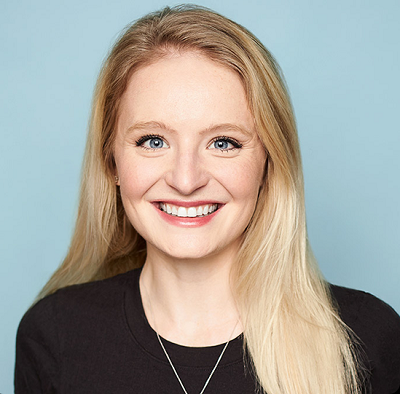
Photo By: Anthill
Muriel Clauson
Anthill • Cofounder & CEO
Clauson’s startup, Anthill, gives “deskless workers,” such as warehouse or manufacturing line employees who don’t have easy access to corporate email or intranets, access to company software and tools via text messaging.
It uses machine learning to help workers quickly access information about everything from health care plan details to whether they can switch shifts with a coworker. Clauson, who met cofounder Young-Jae Kim as a graduate student, won the “future of work” category at the South by Southwest conference’s 2022 pitch contest and has north of $7 million in seed funding from investors.
Andy Cohen & Diane Hoskins
Gensler • Co-CEOs
Hoskins and Cohen have led the world’s largest architecture firm for 17 years, giving them an outsized impact in shaping how workspaces get redesigned in a new era of hybrid work.
These days, Gensler’s some 7 000 employees are working on assignments ranging from a sustainable mass-timber office in Austin for developer Related Companies to Marriott International’s new Maryland headquarters, which includes an 11 000 square-foot childcare center for employees’ kids. Gensler is also the architect behind the new Delta Air Lines terminal at LaGuardia, a major upgrade for any business traveler who’s tried to work in the airport’s much-maligned former space.
Daniel Dines
UiPath • Cofounder & Co-CEO
Along with being a leader in robotic process automation, Dines is a voracious reader of fiction who believes bots can perform boring jobs like invoice processing that free people up to do more engaging activities.
As companies increasingly deal with labor shortages and an aging workforce, automating more tasks through companies like UiPath will also become increasingly critical. The Romanian cofounder and CEO, who has partnered with Microsoft to build new automation experiences and integrated technologies, promotes the positive applications of AI in a world that often views them with fear.
Scott Farquhar
Atlassian • Cofounder & Co-CEO
Australian software billionaire Farquhar went head-to-head with Elon Musk about his return-to-office edict, tweeting it “feels like something out of the 1950s” and then briefly adding a banner on Atlassian’s career page welcoming Tesla employees who might be curious about its policies.
But unlike other companies who boast about flexibility, Atlassian backed it up with numbers, sharing in April that almost 300 employees have moved to a new country since it launched its “Team Anywhere” program; today, nearly 40% of global staff live more than two hours from one of its offices. Slack CEO Stewart Butterfield said hearing about Atlassian’s approach to remote work for top executives helped influence his move to Aspen.
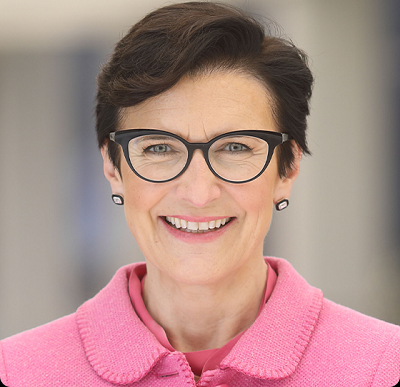
Photo By: Citi Group
Jane Fraser
Citigroup • CEO
The first woman to run a major Wall Street bank, Fraser made Citigroup one of the first to commit to hybrid schedules for many workers at a time when peers were advocating a full return.
In that announcement, Fraser launched “Zoom-Free Fridays” and emphasized the need for “healthy work boundaries” in an industry not known for them. She also leads one of first big companies to say it would cover travel costs for employees who need to go out of state for an abortion, facing backlash from Texas legislators, and with head of H.R. Sara Wechter, has expanded diversity representation goals and recently committed to putting salary ranges in all U.S. job postings.
Larry Gadea
Envoy • Founder & CEO
As founder and CEO, Gadea’s philosophy is simple: “Magic happens when people are together.” Created as a platform to help companies improve front-desk tasks that range from interacting with visitors to managing deliveries, Envoy is evolving to help companies use data to better cluster people in a flexible office environment.
Its latest tool, announced in September, is Envoy Connect, which enables multi-tenant buildings to more efficiently pool their services and available space. Gadea, whom Google hired as a software engineer at the age of 17, argues that “the future of work is a people problem—a people-together problem.”
Beth Galetti
Amazon • SVP, People eXperience and Technology
As the head of human resources at Amazon—which had more than 1.6 million workers at the end of 2021 and could soon displace Walmart as the country’s largest employer—Galetti has overseen a massive expansion of employees at the mega employer and a tech-enabled approach to hiring and H.R. that allowed it to scale.
Yet that scale has also had road bumps: Media reports have scrutinized ways its H.R. systems have been strained by growth, and the company faces ongoing unionization efforts, with workers citing pay and safety. Still, decisions made by Galetti, who said last year the company would expand a 2019 reskilling investment to $1.2 billion and 300,000 workers, have an enormous ripple effect, given the vast scale of Amazon’s reach.
