


Founder: Turnaround Talk
With the significant problems that South African companies are expected to deal with daily, it is very natural for us to retread within our shells and deal with the issues pertaining to our immediate environment.
This is a very blunt statement and doesn’t say anything that we do not already know. Please keep your well duh’s to a low volume. When we retreat into our shells, it is often easy to forget that the global business environment faces significant pressure and challenges that companies are battling to address.
Australia is one of the biggest economies in Oceania and is an example that the rest of the world uses when it comes to risk management. Not only did the country survive the 2008 Global Financial Crisis largely unscathed, its lockdown favoured local manufacturing over imports, which boosted the economy. However, the country is now starting to raise the white flag of surrender; 70% of the country’s turnaround experts expect a recession in the local economy within a year.
This could have a significant impact if the same challenges are played out in South Africa.
High numbers
The Accounts Daily article points out that 70% of turnaround experts expect recession within a year.
The article adds that the mood has turned sharply pessimistic among those on the frontline, a KordaMentha survey finds.
Just 27% thought a recession was likely in the previous Turnaround Survey, but this year industry sentiment had dipped to its lowest point since the study began as business predicted tough times ahead.
It said that compared to the previous nadir in 2020 when the Covid-19 pandemic hit, this year’s sentiment was the “most bearish” yet.
“Access to debt and equity funding has largely dried up, construction businesses are entering administration, consumers are slowing spending, real estate valuations are declining, and costs and wages continue to rise,” it said.
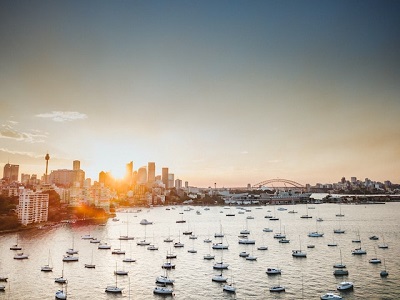
Image By: Josh Withers via Unsplash
Returning to normal
The article points out that KordaMentha executive director performance improvement James Wagg said business expected more financial distress and insolvencies as the economy returned to normal after the artificial stimulus from pandemic measures.
“The economy [is] getting back on a real world setting post-Covid which cannot be achieved without some pain,” he said.
“The government subsidies followed by increased revenues have had a positive impact on profitability, which means many businesses have not been focusing on costs.”
The article adds that the survey showed almost eight out of 10 respondents thought inflation would remain at current levels or increase in the next 12 months, and 40% said the impact on business would be “strong”.
Rising costs and wages were the main pressures on business and sectors in the front line included those which struggled to pass on increases, such as construction, or were coping with weak demand, such as consumer discretionary and commercial real estate.
Significant pressure points
The article points out that a majority of respondents also named cash flow, cyber security and recruitment as significant pressure points.
“Rising interest rates and inflation with resulting cost increases are causing a drop in discretionary spending and profitability,” Mr Wagg said.
“Wage increase decisions are causing pressure in service industries as well and increasing interest rates have made access to finance more difficult.
“The survey predicts an increase in insolvencies and merger and acquisition activity in the next year.”
Compared with last year, fewer respondents thought businesses should focus on revenue growth, but more believed closure or divestment of business units should be a priority, up to 80% from 51%.
But cost reduction emerged as the overriding issue for 84%, against 59% last year.
“Strong mergers and acquisitions activity since Covid has been from companies seeking to grow, prompted by buoyant conditions and the availability of low-interest funds.
“Now it’s the reverse. Companies will be seeking to contract, prompted by distress and the need to liberate capital or lower costs.”
“Construction was the first industry to be affected, unable to pass on rising costs due to fixed price contracts. We are now seeing other industries affected, like retail, impacted by increased cost of living and reduced consumer spending.
“The next are likely to be services industries such as health, as government funding fails to keep up with increasing costs. It’s trickling through the economy.”

Image By: Christopher Burns via Unsplash
The usual suspects and the elephants in the room
The above article points out that Australian companies have to deal with the following challenges which will impact their economy:
- Access to debt and equity funding is largely drying up;
- Construction businesses are entering administration, which means that there are no infrastructure projects that can boost employment in the country; and
- Consumers are slowing spending.
These are not issues that are unique to the Australian market. If I did not preface that these were Australian challenges, they could be challenges impacting the South African market.
Not only do we have to deal with these challenges, we also have to deal with the fact that crucial maintenance projects at Eskom and Transnet are significantly behind schedule. Unit 1 of the Koeberg nuclear plant (a major power producer in South Africa) will only return to service in November. This is three months later than the deadline of July, which is what was promised to the country. Added to this are reports that analysts’ predictions indicate that it could take Transnet 10 years to fix service delivery issues which would reduce the number of trucks transporting coal via road networks.
So, not only are we facing challenges that are impacting developed economies, we are facing these challenges with two major drivers of our economy lagging along with maintenance that could position us as a global economic force. So while there are signs of liquidations decreasing, how long will this be the status quo?
If financial distress and liquidations are going to increase in Australia – which is a market that faces fewer significant challenges than we do – what is the outlook for South Africa?


