

One of the explanations regarding the poor performance of South Africa’s most important State Owned Entity (SOE), Eskom, is that the utility faces a legacy issue regarding its power production capabilities.
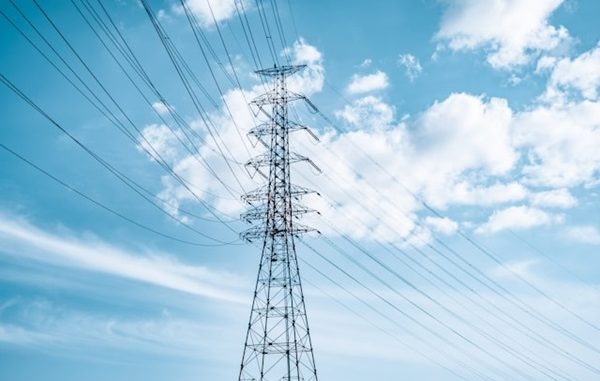
However, the challenges faced by Eskom extend beyond production. The utility is grappling with significant distribution constraints. To make a substantial improvement, Eskom requires 1,400 km of new transmission lines annually. Shockingly, it is currently only managing to install a mere 74 km.
Dismal performance
The article points out that Eskom has failed dismally over the past year to build the new transmission lines it planned despite the urgent need to expand the grid so that more new capacity can be connected.
Grid constraints, especially in the Western, Eastern, and Northern Cape – prime regions for renewable energy – have prevented new wind and solar projects from proceeding over the past year. Grid expansion is a key priority in the government’s energy action plan.
The article adds that, over the 2023/24 financial year, Eskom had planned to build 166km of transmission lines in five projects. However, only three projects, making up 74km of lines, were completed, and none of the lines have yet been “energised” or switched on, Eskom said in answer to questions on Wednesday.
It said that two projects amounting to 88.5km did not go ahead because of “market challenges”.
Excessive tendered prices
These challenges included “excessive tendered prices and non-responsiveness from the market”.
The article points out that energy analysts have criticised Eskom for the lack of ambition in its transmission development plan (TDP). A far greater rollout of infrastructure is required to make up energy shortfalls and facilitate the transition to cleaner forms of energy. The TDP requires Eskom to build 1 400km of lines every year for 10 years. This would require a massive ramp-up from the 2023/24 target, which analysts speculate will not be possible.
Image By: Jerry Wang via Unsplash
Said energy commentator Chris Yelland: “Eskom is facing a massive challenge of 14 000km over the next 10 years, but it is starting from a very low base of 74km. It’s going to have to ramp this up massively. And none of the 74km it did build has been energised, so the amount built over the past financial year is effectively zero.”
A recent report by consultancies Meridian Economics and Krutham criticised Eskom’s TDP, estimating that at least 2 000km of new lines a year was required. The report recommended that the National Transmission Company (a subsidiary of Eskom) contract with the private sector through arrangements in which transmission projects are built and operated by the private sector in return for a revenue stream.
Several initiatives
The article pointed out that Eskom said it has implemented several initiatives to mitigate risks and increase the TDP’s performance. These include more effective contracting arrangements with the industry that would increase the resources allocated for projects at the front end. It was also “at an advanced stage” of evaluating bids by contractors to design, procure, and construct transmission lines and substations.
The NTCSA was established recently when it was unbundled from Eskom. A key part of the NTCSA will be an independent Transmission System Operator (TSO), which would be able to raise funding and contract more easily with the private sector.
The article adds that UCT professor Emeritus Anton Eberhard tweeted on 15 May: “For years, Eskom has been saying it has enough finance for transmission expansion and is doing OK. Evidently not. Instead of the required 1 400km extension last year it completed only 74km. Moving the TSO fully outside Eskom is now urgent.”
However, Eskom has recently said that finance was not the problem regarding transmission lines; instead, it was reluctant to take on more debt just as it was beginning to clean up its balance sheet with financial assistance from the Treasury.
In February, Eskom turned down billions in cheap finance offered through the Just Energy Transition (Jet) climate finance deal because it was reluctant to take on additional debt, it said.
Image By: American Public Power Association via Unsplash
A gargantuan effort
This is the crux of the matter that is deeply unsettling the public. If the public is diligently paying their electricity bills, how can Eskom find itself in a financial predicament that hampers necessary maintenance and grid enhancement?
Service delivery will be a significant sticking point in this year’s election, which is shaping to be one of the most important in the country’s history. Lines are busy being drawn in the sand. Here and no further. If the ANC retains the majority of the vote, they will not receive the two-thirds needed to dominate as they used to. In this environment, every commitment made by the Government that is not delivered on will result in more lost votes in the next election, where the ANC will then run a severe risk of losing their hold on power.