
Founder: Turnaround Talk
Many of us are aware of the dire economic challenges that south Africans have been facing over the past 10 years. With interest rates increasing and a looming global recession, discretionary spending is being put under pressure and the resolve of many South Africans is being tested to the limit.
This obviously impacts certain industries quite severely. Families are putting off holidays in favour of channelling extra cash into the household. Prospective first-time homeowners are once again renewing their rental agreements, and South Africans who were looking to upgrade their vehicles are second guessing this decision.
While many believe that this has been the case for quite some time now, recent statistics show that South Africa’s new vehicle market saw double digit growth in 2022.
Close to 529 000 vehicles were sold in 2022
The IOL article points out that, According to Naamsa, a total of 528 963 new vehicles were sold during 2022, representing an increase of 13.9% over 2021, although the market was still 1.4% down versus the last pre-pandemic year 2019.
Naamsa said the lifting of all Covid-19 lockdown restrictions in 2022 provided considerable support to the new vehicle market, along with the resultant recovery in business and leisure travel.
The article adds that A total of 41 783 new vehicles found homes in December, which was an increase of 16.2% over the same month in 2021. Light commercial vehicles led the way with a year-on-year growth of 16.1%, while the passenger car market grew by 15.4%.
About 89% of new vehicle sales last month took place through the dealer channels, and the rental industry accounted for 7.3% of sales, while government and corporate fleets each took a 1.5% slice.
Toyota, as you’d expect, took the top spot on the local sales charts with total sales of 11 250. It was followed by Volkswagen (5 331), Suzuki Auto (3 058), Hyundai (2 770) and Nissan (2 144).
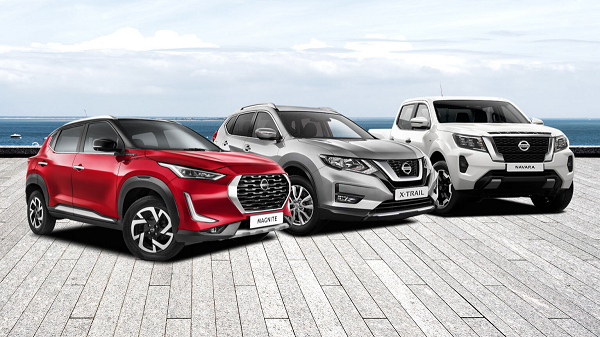
Photo By: Nissan South Africa
What are the prospects for 2023?
The IOL article points out that Naamsa believes the South African new vehicle market will remain resilient this year, despite weakening economic indicators and a deteriorating global growth outlook.
The association predicts that vehicle market growth will return to single digits in 2023, given that anticipated GDP growth for the country has been adjusted downwards to 1.1%. However, even this slower growth rate should be enough to return the vehicle market to pre-pandemic levels, Naamsa said.
“Growing concerns about global ‘stagflation’, which is high interest rates combined with slow growth and high inflation, the continued economic impact and disruption of supply chains resulting from the Russia-Ukraine war, and the current pace of tighter monetary policy in major markets have increased the possibility of a global recession,” Naamsa said.
Export challenges ahead
The IOL article points out that South Africa’s vehicle exports grew by 17.9% to 351 450 units, in spite of the strain that the KwaZulu-Natal flooding put on the logistics network last year.
While the export scenario could be supported in 2023 by new model introductions by major vehicle exporters, the risk is still on the downside as global economic conditions have deteriorated and many countries are seeing aggressive interest rate hikes.
“There is also a likelihood of further near-term global supply chain disruptions stemming from the rapid re-opening of the Chinese economy that has resulted in surging Covid-19 infections.”
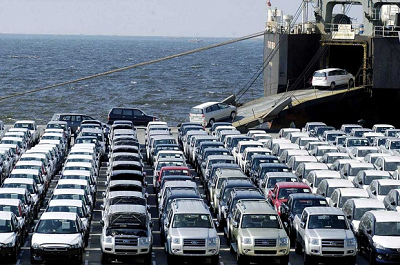
Photo By: Canva
Significant challenges
The dynamics in this industry will always shift. However, there are a few challenges that retailers need to pay attention to in 2023.
Discretionary spending is decreasing. While this may have not been the case in 2022, many economists are predicting a major global recession in 2023 this will impact everything from food prices to the price of petrol and diesel. This may cause some consumers to consider downgrading their vehicles from an SUV to a smaller model. However, those looking at entry level cars are in a worrying position. This may mean that car companies will have to look at their fleet and make necessary adjustments.
The supply chain crisis is also proving t be problematic for both consumers and car manufacturers. My wife ordered a new car in July 2022; with the delays associated with the supply chain crisis, the vehicle was only delivered at the end of October. This can be challenging for manufactures who have to adhere to tight deadlines.
While far from an industry that is in financial distress, there are challenges that can impact profitability. These need t be managed properly and car manufacturers will possibly need to look at different ways to wok past the financial stresses consumers are experiencing.