

The original article can be found here.
Since the beginning of the Fourth Industrial Revolution in 2015, there has been a significant focus on the future of work and what this will look like in five or even 10 years’ time.
Forbes recently published an article which focuses on the Top 50 businesses and business leaders that are shaping this future. Find out more about 31 to 40 below.
Monica Khan
Spotter • Head of Creator Community
Founded in 2019, Spotter offers YouTubers large sums of capital upfront to buy the rights to their back catalogues of video content.
The goal is to help creators scale their social media business, create new content and offer a financing solution in an industry where pay checks can be inconsistent. As head of the company’s creator community, Khan provides partnership and business development advice to content creators. Prior to Spotter, Khan worked at YouTube for six years as a partner manager and Meta for two.
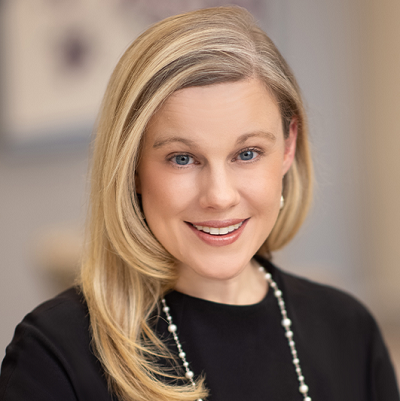
Photo By: IBM
Nickle LaMoreaux
IBM • SVP, Chief Human Resources Officer
Described by one future of work expert as the “gold standard” for upskilling and reskilling employees, IBM is continuing its efforts on apprenticeships, training and removing degree requirements under LaMoreaux’s leadership.
Currently, some 50% of IBM’s US jobs do not require a four-year degree, and LaMoreaux is working to increase the number of jobs globally that don’t mandate diplomas. To avoid biases toward degrees, managers can’t conduct interviews or post jobs unless they’re certified in IBM training that reinforces skills.
State Sen. Monique Limón (D)
California • Legislator
Inspired by Colorado’s pay transparency law, Limón sponsored a bill requiring companies with 15 or more employees to disclose pay ranges in job ads in California.
Limón worked with state colleagues and advocates such as the California Employment Lawyers Association; the law goes into effect in January 2023, just two months after New York City’s law that recently took effect. California’s huge size could make it a tipping point for pay transparency in job ads. “She was just an incredible champion for getting this done,” says Mariko Yoshihara, legislative counsel and policy director at CELA. The law also requires companies with more than 100 employees to report wage data by race, ethnicity and sex.

Photo By: Airtable
Howie Liu
Airtable • Cofounder & CEO
Tech entrepreneur Howie Liu taught himself to code by age 13. With Andrew Ofstad and Emmett Nicholas, he launched Airtable in 2013 to create spreadsheets that have the power of databases.
Now, more than 300,000 organizations ranging from Amazon to sole proprietorships use it to create apps, share data and connect workflows. As one future of work expert explains, “it was built from the ground up to take something that in your head might have been a spreadsheet and make it visual, shareable and dynamic.” For Liu, the goal is to not just to enhance productivity, but democratize how software is created and data gets deployed.
Garrett Lord
Handshake • Cofounder & CEO
As a student at little-known Michigan Technological University, Lord discovered the glaring inequality in career opportunities he saw compared with students at well-known or Ivy League institutions.
So, along with students Ben Christensen and Scott Ringwelski, he created college recruiting marketplace Handshake to level the playing field. His goal: Transforming how Gen Z gets hired, giving students from all backgrounds and income levels an opportunity for a shot at jobs with America’s biggest employers. Handshake partners with employers and colleges, who each may pay a fee to use the platform for job postings and recruiting. Today, it’s used by more than 750 000 employers, 1 400 schools and 10 million students and alumni.
Morag Lynagh
Unilever • Global Future of Work Director
Lynagh has led Unilever’s U-Work program since it was piloted in the U.K. in 2019, giving employees flexibility associated with contract roles—but benefits akin to permanent jobs.
With a monthly retainer and modified perks such as healthcare and retirement, employees apply to work on projects. Although the original idea came from thinking about how to support older workers, Lynagh says Unilever quickly recognized its appeal to all ages. “This gives them an alternative to leaving, an alternative to taking their chances in the gig economy,” says Lynagh, as well as helping Unilever. “We know them, and they know us. That means they hit the ground running.”
Donna Morris
Walmart • EVP, Chief People Officer
Morris, who joined Walmart in early 2020 after a long career at Adobe, now leads human resources for the largest private employer in the US, making decisions that impact more than two million employees globally.
Even if it has further to go, Walmart has seen criticism of its labour practices fade as the retailer raised wages and expanded training, and Morris has accelerated those efforts. Under her watch, the retailer has launched a global upskilling academy and added fertility benefits for workers while expanding education reimbursements, evolving them toward more tech-driven skills and bringing more HBCUs into its talent pipeline.
Darren Murph
GitLab • Head of Remote
Murph has been a pioneer of and advocate for the title “head of remote,” a role that has grown during the pandemic as companies try to coordinate the new and increasingly complex needs—from communications and human resources to real estate and IT—of remote and hybrid workforces.
The former tech editor and communications adviser works at software firm GitLab, which has been all-remote since 2011. He authored the company’s “Remote Playbook,” a handbook that codifies GitLab’s practices and is available publicly online; it has been downloaded more than 150,000 times, according to Murph.
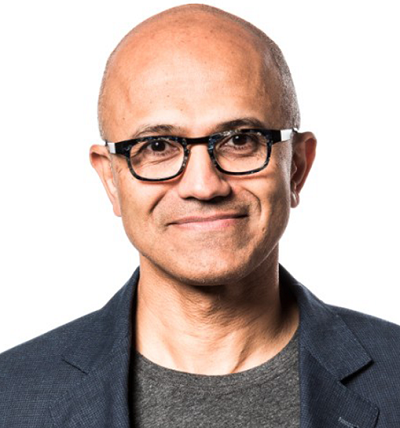
Photo By: Microsoft
Satya Nadella
Microsoft • CEO & Chair
Since becoming CEO in 2014, Nadella has led Microsoft’s successful transformations via cloud computing, mobile, and AI – all while fostering a culture in which employees shift from being “know-it-alls” to “learn-it-alls.”
Whether acquiring market leaders like LinkedIn or launching tools like Teams or Places, Nadella positioned Microsoft for a world where hybrid work is here to stay. The company’s proprietary research also now offers some of the freshest insights on the future of work, from the downsides of managers’ productivity paranoia to what it means to work a “triple-peak day.” Nadella also wrote his own book about his quest to rediscover the soul of Microsoft.
Stephanie Nadi Olson
We Are Rosie • Founder & CEO
Olson, whose father was raised in a refugee camp in Palestine, founded We Are Rosie in 2018 after a career in high-tech sales and advertising left her struggling to balance work and motherhood.
Her startup, which matches independent marketing professionals with long- and short-term corporate projects, adds another platform to the gig economy, but Olson has also rethought how her internal team works. In 2020, she switched from unlimited vacation to a policy that requires it: Employees must take five days off per quarter or risk losing their full bonus. “Having that forcing mechanism and tying it to pay certainly helps with a very quick change,” Olson told Forbes earlier this year.