

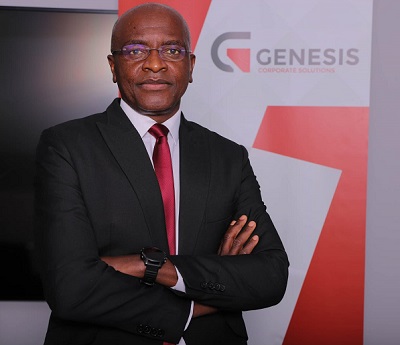
Partner: GCS
In the introduction to my last thought leadership editorial, I pointed out two crucial facts; businesses are being forced to operate in a particularly distressed economic environment, and the change (disruption) companies have faced over the past three years is the same as the cumulative change felt in the past ten years.
The impacts of these two facts are felt far beyond the reduction in profits. In fact, the biggest impact of these two challenges is felt among employees who are probably approaching their daily tasks with muted confidence as they are unsure if the interventions that they are making will translate into success.
It is up to the company’s leadership – C Suite and managers – to manage this anxiety. I recently read an article on the Harvard Business Review website which points out that the role of managers needs to change in five ways.
Directive to instructive
The article points out that when robots driven by artificial intelligence (AI) do more tasks like finish construction or help legal professionals more efficiently manage invoices, there will be no need for a supervisor to direct people doing such work. This is already happening in many industries — workers are being replaced with robots, especially for work that is more manual than mental, more repetitive than creative.
What will be needed from managers is to think differently about the future in order to shape the impact AI will have on their industry. This means spending more time exploring the implications of AI, helping others extend their own frontiers of knowledge, and learning through experimentation to develop new practices.
The article adds that Jack Ma, co-founder of the Alibaba Group in China, recently said, “Everything we teach should be different from machines. If we do not change the way we teach, 30 years from now, we will be in trouble.” Ma is referring to education in the broadest sense, but his point is spot on. Learning, not knowledge, will power organizations into the future; and the central champion of learning should be the manager.
Restrictive to expansive
The article points out that too many managers micromanage. They don’t delegate or let direct reports make decisions, and they needlessly monitor other people’s work. This tendency restricts employees’ ability to develop their thinking and decision-making — exactly what is needed to help organizations remain competitive.
Managers today need to draw out everyone’s best thinking. This means encouraging people to learn about competitors, old and new, and to think about the ways in which the marketplace is unfolding.

Image By: juanjo tugores via Pixabay
Exclusive to inclusive
The article adds that too many managers believe they are smart enough to make all the decisions without the aid of anyone else. To them, the proverbial buck always stops at their desks. Yet, it has been our experience that when facing new situations, the best managers create leadership circles, or groups of peers from across the firm, to gain more perspective about problems and solutions.
Managers need to be bringing a diverse set of thinking styles to bear on the challenges they face. Truly breakaway thinking gets its spark from the playful experimentation of many people exchanging their views, integrating their experiences, and imagining different futures.
Repetitive to innovative
The article points out that managers often encourage predictability — they want things nailed down, systems in place, and existing performance measures high. That way, the operation can be fully justifiable, one that runs the same way year in and out. The problem with this mode is it leads managers to focus only on what they know — on perpetuating the status quo — at the expense of what is possible.
Organizations need managers to think much more about innovating beyond the status quo – and not just in the face of challenges. Idris Mootee, CEO of Idea Couture Inc., could not have said it better: “When a company is expanding when a manager starts saying ‘our firm is doing great’, or when a business is featured on the cover of a national magazine – that’s when it’s time to start thinking. When companies are under the gun, and things are falling apart, it is not hard to find compelling reasons to change. Companies need to learn that their successes should not distract them from innovation. The best time to innovate is all the time.”
Problem solver to challenger
The article adds that solving problems is never a substitute for growing a business. Many managers have told us that their number one job is “putting out fires,” fixing the problems that have naturally arisen from operating the business. We don’t think that should be the only job of today’s manager. Rather, the role calls for finding better ways to operate the firm — by challenging people to discover new and better ways to grow and by reimagining the best of what’s been done before. This requires practicing more reflection — to understand what challenges to pursue and how one tends to think about and respond to those challenges.
Image By: Marcus Williams via Pixabay
Employer to entrepreneur
Many jobs devolve into trying to please one’s supervisor. The emphasis on customers, competitors, innovations, marketplace trends, and organizational performance morphs too easily into what the manager wants done today — and how he or she wants it done. Anyone who has worked for “a boss” probably knows the feeling.
The article points out that the job of a manager must be permanently recast from an employer to an entrepreneur. Being entrepreneurial is a mode of thinking, one that can help us see things we normally overlook and do things we normally avoid. Thinking like an entrepreneur simply means expanding your perception and increasing your action — both of which are important for finding new gateways for development. And this would make organizations more future-facing — more vibrant, alert, playful — and open to the perpetual novelty it brings.
We want managers to become truly human again: to be people who love to learn and love to teach, who liberate and innovate, who include others in the process of thinking imaginatively, and who challenge everyone around them to create a better business and a better world. This will ensure that organizations do more than simply update old ways of doing things with new technology, and find ways to do entirely new things going forward.
Lead by example
The future role of C Suite Executives and managers can be summed up in one insight: they need to be comfortable with change.
Agility is an industry buzzword at the moment. However, only a few executives know what this actually means for their business. Agility is the ability to be fluid enough to change from one management style to another in response to shifting dynamics and evolving risks within a business. Managers must be aware of this and train themselves to be confident in their abilities. This will rub off on employees who may need help dealing with change.
Moses Singo is a Partner at Genesis Corporate Solutions and is a Senior Business Rescue Practitioner.


