
Director: ReVive Advisory & Turnaround
For centuries, South Africa has established a reputation as a global mining powerhouse. Commodity demand worldwide gets services from South Africa, which has a vibrant and innovative mining industry and a well-established logistics network that can get products to key export terminals.
Miners in South Africa are in for another rough year. The extent of this distress is becoming more evident as the media uncovers the unfolding drama.
Industries in trouble
South Africa is a platinum powerhouse accounting for 70% of global production. Producers of platinum-group metals – used to curb emissions from gasoline and diesel vehicles – directly employed almost 182,000 people in 2023, according to the Minerals Council of South Africa.
However, waning demand and significant drops in the price of platinum have placed the country’s major miners in significant distress.
An article by Bloomberg pointed out that Amplats (the platinum business of Anglo American), has opened discussions with labour unions that may affect 3,700 jobs. Sibanye Stillwater already cut 2,600 employees and contractors following similar consultations, and Impala Platinum said it shed more than 1,000 jobs in the second half of last year.
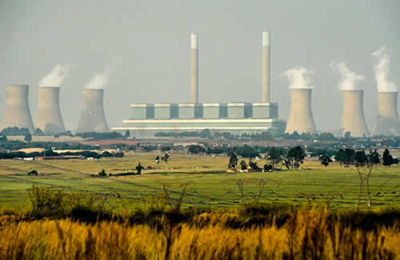
Image By: Eskom
Just two years ago, profits were at all-time highs as automaker demand pushed the price of rhodium and palladium – mined alongside platinum in South Africa – to record levels. Since the start of 2023, the price of palladium and rhodium has tumbled 44% and 63%, respectively, hit by inventory destocking and a subdued global economy.
The article points out that, while the decline of platinum has been more modest, the overall collapse in the PGMs has been devastating for miners’ bottom line: full-year profit at Amplats slumped 73%, while earnings at Implats and Northam for the six months through December plunged about 90%. Sibanye recently reported a $2 billion loss.
The shares of all four companies have lost more than half their value since the beginning of last year.
The producers have reacted to what Northam Platinum CEO Paul Dunne describes as the “worst crisis” in three decades by cutting costs and curbing spending.
The article points out that Amplats is targeting savings of 5 billion rand ($261 million), while Implats plans to cut its expenditure by more than half a billion dollars over the next five years across its operations in Canada, Zimbabwe and South Africa. Sibanye and Implats are both hobbled by high-cost palladium assets in North America, where the firms have axed an expansion project and shortened the life of a mine.
The miners are bracing for a prolonged period of pain, with CEO Dunne expecting the “depressed pricing environment” to continue for as long as two years.
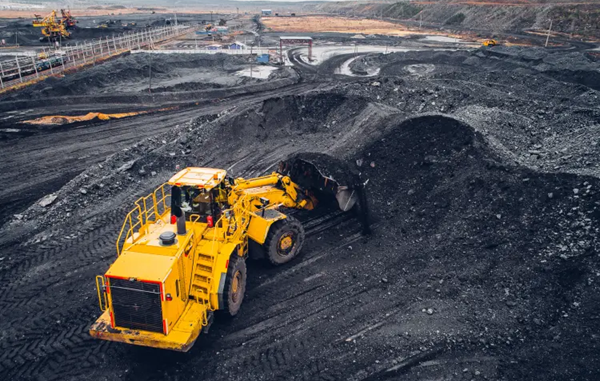
An article that was recently published on Turnaround Talk points out that five coal-fired power plants and 15 coal mines will likely close by 2030, and another four plants and 23 mines by 2040. This will impact the livelihoods of 2.5 million people, most of them in Mpumalanga. The closure of 15 mines by 2030 will withdraw 29.5 million tons a year (mtpa) from SA’s coal production, followed by a further 106 mtpa as an additional 23 mines are closed by 2040. This will impact 69 mining host communities and 21 municipalities.
There are 66 operating coal mines in SA, most in Mpumalanga, owned by 32 private companies. Together, they produced 231 million tons of coal in 2022, generating earnings of R28 billion and employing nearly 91,000 people. Earnings would have been higher in 2022 but for the well-publicised problems at Transnet, resulting in lost export revenues of R22.7 billion in 2022.
Underperforming in a healthy environment
One of the current trends that is becoming increasingly evident is that there are companies that are underperforming while the ecosystem surrounding them (the industry) is healthy.
I used healthy in this context for a specific reason. While there are significant headwinds in the platinum industry that can have a massive impact on mining companies, there is demand in the industry. A recent post by Cremer Media points out that automotive demand for platinum is expected to hit a seven-year high this year.
Speaking to Mining Weekly, World Platinum Investment Council (WPIC) Research Director Edward Sterck pointed out that it seems that the automakers have effectively accumulated excess inventories of around a million ounces of platinum, and that roughly matches up with the major deficit of 878 000 oz that the WPIC estimates for 2023. “We think what’s happened is that during 2023, automakers effectively managed their new purchasing commitments to run down those excess platinum group metal (PGM) inventories, which effectively took the heat out of the market. That process continues to run through into the beginning of this year but we think it has largely now run its course,” Sterck highlighted.
It would appear that the cause of the distress is a simple case of stockpiling, oversupply and demand management. This should correct itself within the next two business cycles. During this period, miners will have to rationalise their cost base and smart decisions now will enable even healthier profits in the future.
Image By: SAPS
Turning around communities
The second issue that needs to be dealt with is the communities will need to be repositioned into other value added activities.
The Bench Marks Foundation (BMF) is calling for the repurposing of affected areas and communities to put them on a sustainable footing. The BMF has noted that there are significant headwinds in the platinum and coal sectors that are burdensome for mining companies in these sectors.
The BMF has called for such mining towns and even mine sites to be repurposed and re-engineered towards sustainable post-mining economies. This should be the focus of rural-urban renewal and more localised beneficiation of extracted minerals, particularly when it comes to PGMs.
Meaningful engagements
South Africa needs a comprehensive and sustainable approach to the mining of our commodities and beneficiation within communities that surround the smelters. This needs to include the scenario where our chrome smelters are bought back online, and we stop exporting raw chrome to competing economies. Obviously, this can only be addressed when Eskom’s supply problems are resolved, which is yet another engine of growth in South Africa.
Turnaround, finance and industry professionals need to have meaningful engagements with Government regarding this issue. If Government policy and inaction doom mining to become a sunset industry, what future lies ahead? Further, how will this impact the economy? This is a conversation that extends beyond the Mining Indaba and includes all social parties in shaping a sustainable economy. This was the sole purpose and vision for Nedlac. They have also not led this discussion effectively.
These are the conversations that really matter.


