

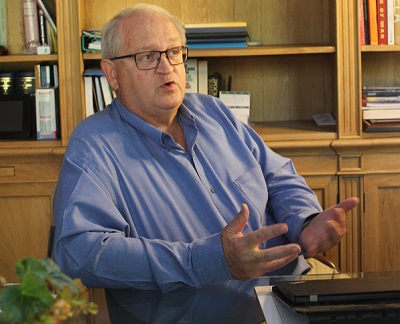
Director: ReVive Advisory & Turnaround
In a market where companies are increasingly facing distress, shareholders and stakeholders are continually looking for value and how to maximise it from companies that are approaching or navigating through financial distress.
Valuations are the basis for all distressed business turnarounds. While there are a number of ways to calculate value, the baseline is always the liquidation valuation. Comprehensive free cash flows from operations, allowing for working capital, debt repayments and capital expenditures, give a true reflection of the cash available to redeem debt and deferred obligations.
Increasing value
In all business endeavours, we strive to increase the value of the assets we manage and own. In distressed situations, valuations get very tricky. As Warren Buffett said: Risk comes from not knowing what you are doing. A company is in distress because a risk materialised that was not professionally managed, either through insurance or planning.
Often, Companies end up in distress because the Boards did not know what they were doing. This is a severe position, and the real world has imperfect information. Business is taking on known risk for reward.
This principle of risk and valuation permeates our Companies Act (71, 2008). It is the very essence of limited liability. You only have so much capital at risk and no more. Boards of Directors must regularly assess their solvency and liquidity and ensure that they have adequate resources to meet obligations as and when they fall due. Solvency risk. Assets should exceed liabilities. Liquidity risk.
When looking at any distressed situation, we turn to a Liquidation valuation and then ask: Is this plan an outcome better than an immediate valuation? Immediate implies a ready and liquid market for the assets. Those are not so easy to find as any liquidator or Auctioneer will tell you.
Important estimation
At its heart, a valuation estimates the value that can result from future cash flows available from investors to satisfy debt and provide a return to shareholders. In arriving at the valuation, risk is always the primary consideration.
The Benchmark is always whether the cash flows from future operations will exceed the liquidation values that can be achieved. (Either at once or through a managed wind down.)
In deciding the liquidation valuations, we make use of the liquidation cascade to determine how the cash will be distributed after allowing for the various secured, unsecured and preferential claims.

Image By: Canva
It is the assessment of the value that will be achieved in realising the assets that provides the greatest uncertainty. These values are impacted by the macro environment and general economy, as well as the specific industry and geographic location of the assets.
When we compare the turnaround cash flows, we anticipate that these flows will provide a better return than the liquidation dividend. Secured creditors will always be loath to take the risk associated with ongoing operations rather than liquidating hard assets. They allow trading in the hope that, in fact, their security will improve through trade. i.e., the debtor value will increase, there will be more stock, etc. That said, it is unusual for the secured creditors to release their security in favour of other lenders unless the surplus is substantial. If the risk that they will not recover all the money advanced is low, not releasing security could be challenging, as it would be unreasonable and prejudicial to the other creditors.
Only the beginning
An operating cash flow is only the beginning of a valuation. The working capital needs should be considered. Capital expenditures to maintain operations need to be included. Maintenance and capex replacements are always the easiest to withhold in cash flow management.
The practice of determining the outcome of a business rescue by projecting the future cash flows applied to reduce debt as against the liquidation dividend is comparing apples and oranges.
The debt redemption plan or cascade should be presented as a separate cash flow from operations as it can only be done out of the surplus cash flow after allowing for interest, debt redemption payments and tax payments.
This implies that the forecast cash flows should be based on the nominal operating profit after tax and allow for sufficient working capital to support operations and growth.
Valuation proxies such as Earnings Before Interest Tax and Depreciation (EBITDA) are horribly misleading. That measure is best suited for very defined businesses that do not have to generate cash to grow working capital and expansionary capital expenditures. Media projects and events apply, but the real-world business very seldom allows for a true value to be decided by these valuations.


