

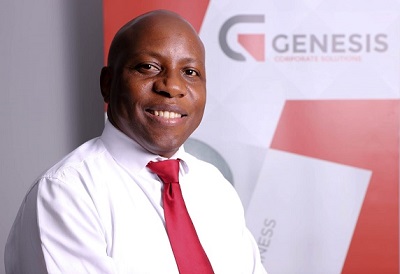
MD: Genesis Corporate Solutions
Happy New Year to all. GCS hopes that this will be an exciting and productive year for every company in South Africa and that the country can continue to be a beacon of hope for other countries in the region.
Regarding business rescue, business turnaround and liquidations, 2024 was a mixed year for the country. While the number of liquidations is decreasing – according to Statistics South Africa – the sheer volume of companies still experiencing financial distress is high. GCS has spoken at length about the contributing factors that are driving this. However, there is an additional factor that needs to be considered. Are you truly listening to your stakeholders? This can be an essential factor that can negatively impact your company.
I recently read an article on the Harvard Business Review (HBR) website which discusses this in detail.
The PGA-LIV Golf saga
The HBR article points out that, in 2023 the CEO of the PGA Tour, Jay Monahan, along with two members of its board, concocted a partnership with the Saudi Public Investment Fund (PIF) without consulting other board members or any of the PGA Tour’s key stakeholders: players, sponsors, broadcasters, and fans.
The move came as a big surprise. For two years Monahan had belittled the efforts made by the Saudi PIF to launch its own golf circuit — LIV Golf — and had justified not getting involved by publicly and moralistically invoking the memory of 9/11 and Saudi involvement in the attacks. But then all of a sudden, on June 6, there he was on primetime television, appearing alongside the governor of the Saudi PIF and announcing that they had privately reached an agreement for the Saudi PIF to become a multi-billion-dollar investor in the PGA Tour. This partnership, the official press release declared, would ensure that “all stakeholders benefit from a model that delivers maximum excitement and competition among the game’s best players.”
The HBR article adds that, for years PGA Tour executives and board directors had successfully coordinated the divergent interests of stakeholders, preserving a fragile equilibrium in which no stakeholders could impose their interests at the expense of the others. However, when the most powerful stakeholder — the players — realized that their voice had been ignored during the negotiation of the Tour-Saudi PIF agreement, they reacted in ways that upset that fragile equilibrium and threatened to harm the PGA Tour’s business model.

Image By: Canva
To begin with, they forced executives to grant them a majority on the board, so that the plan could only proceed with player approval. They also forced executives to steeply increase tournament prizes (money that would be paid in part by sponsors), a response that stemmed from some of those players having previously turned down multimillion-dollar offers from LIV Golf because of the PGA Tour’s moral stance. In response, sponsors reduced their commitment: Some moved from a long-term to a short-term relationship with the tour (Royal Bank of Canada told the tour it would renew its sponsorship annually, in contrast to previous multi-year agreements) and others discontinued their relationship altogether (Wells Fargo and Farmers Insurance had been tour sponsors for more than a decade).
The effect of all of this was that the once-successful PGA Tour business model, which had taken decades to build, began to fall apart.
Mechanisms for Improvement
So how do companies become more attentive to stakeholders?
The authors of the HBR article point out that, in their work on this topic, they identified three ways through which you can ensure that your key stakeholders — those without whom the proper functioning of your business model would be disrupted — have a voice, listen to one another, and work together as effectively as possible.
Create a forum. To enhance communication with and among key stakeholders, you must create a space where everybody can share their interests. When the Saudi PIF threat appeared, the PGA Tour’s board of directors should have opened a forum where stakeholders could have voiced and discussed their interests. If such a forum had existed, the stakeholders would have quickly recognised the degree to which they were interdependent and needed to work on this challenge together. Before demanding that the PGA Tour increase their prizes, for example, the players would have benefitted from hearing from sponsors how that move might affect them — specifically that it would put them under financial strain at a time when they were already struggling. (Because of defections to LIV Golf, sponsors were getting less exposure due to a weakened TV audience.)
Serve as mediator. Having a forum where stakeholders can voice their interests improves their mutual awareness, but it does not guarantee that stakeholders’ often divergent interests will be automatically aligned. That is because although all key stakeholders are necessary for the business model to work, some are naturally more important than others and can therefore exert their power in the forum to impose their interest. As an executive at the centre of the stakeholder nexus, you are in a unique position to mediate and identify compromises so that no stakeholder is favoured at others’ expense or blocks decision-making.
Stipulate information rights. The HBR article points out that the prior two mechanisms increase the chances that a balance will be found among stakeholders’ interests. Still, they do not ensure that stakeholders will actually discuss the most relevant issues because executives might be withholding important information from them. Suppose you want to improve transparency and build trust among stakeholders and executives. In that case, you should make it possible first for everybody to declare what issues are most important to them, and second you should stipulate that every stakeholder has the right to information about important decision-making processes. In December 2023, partly due to the atmosphere of mistrust generated by the Saudi-PIF announcement, a large group of PGA Tour players sent a letter to the tour’s board of directors demanding full disclosure of the information regarding the agreement with the Saudi PIF.
Bridging the Gap
New York City’s Museum of Modern Art (MoMA) is an excellent example of an organisation that has figured out how to facilitate contributions and integrate feedback from various key stakeholders, notably artists, patrons, and trustees. In addition to providing information rights to certain stakeholders, the MoMA deliberately gives voice and facilitates dialogue among stakeholders by regularly hosting focus groups where stakeholders can exchange ideas on specific initiatives.
The HBR article points out that, for example, in the 2019 MoMA renovation and expansion project, in which the MoMA reimagined and enlarged its physical space, artists whose works had been exhibited in the museum were involved in defining how the new space would allow for innovative exhibitions that might move beyond painting and sculpture to include multimedia art. Patrons, for their part, were involved in discussing how creating dedicated spaces named after major donors might help fund the project in alignment with MoMA’s curatorial goals. Lastly, trustees were included to ensure that the new design would be thought through with underrepresented groups of museum-goers in mind. To bridge the gaps among artistic, financial, and community perspectives, MoMA brought all of these stakeholders together in focus groups and facilitated discussions among them — and then later held follow-up meetings with stakeholders to inform them about how their feedback was incorporated into the design. This kept them engaged and enhanced their mutual sense of ownership.

Image By: Canva
Naturally, facilitating an open dialogue with and among stakeholders can slow decision-making and create more time for competitors to learn about the company’s plans. However, as the PGA Tour case illustrates, ignoring and overriding the voice of stakeholders can end in far worse consequences.
Questions to Ask
To assess the necessity of these three mechanisms, ask yourself the following questions.
The HBR article points out that you first need to ask if it would be difficult to substitute your stakeholders. If their contribution is difficult to replace, that speaks to how important they are — if they leave, they can seriously disrupt the functioning of your business model. In the case of the PGA Tour, there are only a limited number of corporations that can afford to pay more than $15 million to sponsor a tour event and have that investment fit into their marketing strategy.
Second, in your business model, is your main role coordinating your stakeholders? If so, you will need to do everything you can to ensure you can do it well because your business model depends on it. And that means you will want to engage all three of our mechanisms. The PGA Tour, for example, does not own the facilities where its golf tournaments are held, nor does it fund the tournaments it hosts or even employ the golfers, who are independent contractors. Instead, the PGA Tour’s primary role is to coordinate the contributions of players, sponsors, and broadcasters to deliver the best possible tournaments to fans.
Third, are some of your key stakeholders absent from your governing bodies? If so, especially if you have answered “yes” to the two previous questions, then our mechanisms may be very necessary. Despite the importance of sponsors and broadcasters on PGA Tour’s business model, they were largely absent from its governing bodies, had no forum to voice their interests, did not have a tour executive to mediate among them, and had no information rights.
The time is now
The new year is a time of new beginnings. It is taking the lessons from 2024 and applying them to a challenge being approached with renewed vigour.
This is the opening you need to listen to stakeholders. Be attentive to their concerns or the strategy that they think the company should follow. You may benefit greatly.


