


Founder: Turnaround Talk
I was watching an episode of Last Week Tonight with John Oliver, where he highlighted the recent challenges that US power utilities were experiencing. A possible solution to this – according to Oliver – is that the US should consider the establishment of State-Owned Enterprises (SOEs).
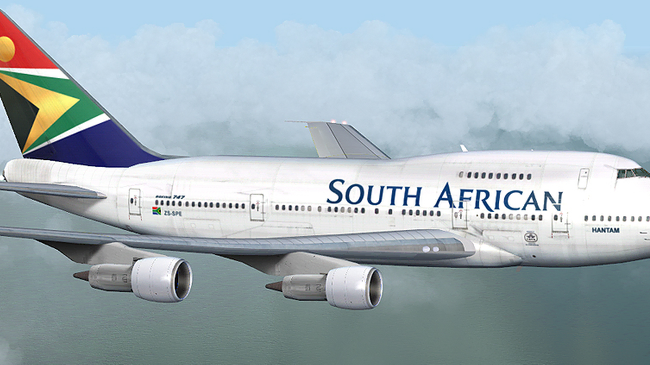
This comes at a time when South Africa is looking to jettison the problematic business model as it is just to susceptible to corruption and maladministration/mismanagement. This was an issue that was at the core of South African Airways’ (SAA) financial distress.
At the beginning of the SAA process, the issue of the privatization of SOE’s was discussed and debated extensively within Government circles and within the press. It was determined that the best way to privatise SAA would be through selling a stake of the company to a private equity partner. The proceeds of this sale would fund the shortfall in the company’s turnaround strategy.
The involvement of the Takatso Consortium has not gone without its own criticism. The company has been reluctant to release its funding until SAA gets its house in order. Many opposition politicians, and the media, have voiced their concerns about this.
Gordhan defends Governments decision
Despite these concerns, Pravin Gordhan (Minister of Public Enterprises) has defended Governments course of action. This comes a week after he insisted Government were not thugs and were not running Eskom like The Mafia.
The EWN article points out that the sale of a 51% stake in South African Airways (SAA) has raised many eyebrows and earned a threat of possible legal action from the Economic Freedom Fighters (EFF) but Public Enterprises Minister Pravin Gordhan said that there were a number of contributing factors, including that the ailing airline was dormant during the pandemic.
Gordhan has defended the decision to privatise the struggling national carrier, which he’s previously described as a fiscal drain costing government more than R49 billion in bailouts since 2006 and failing to make a profit since 2011.
The EWN article adds that the minister said that the deal to sell a majority stake in SAA to Takatso Consortium remained the better option.
“You have a distressed asset, which you could have disposed of, and there would have been a sale of some of the buildings and so on – all 4 000 odd staff would have lost their jobs and would have walked away with something like R28 000. The alternative was better both for the staff and the airline that we can actually make it work,” Gordhan said.

Photo By: News24
Cessation of hostilities
This seemingly brings a truce to the spat between Gordhan and Finance Minister Enoch Godongwana over the matter which has been brewing since August 2021.
However, Carol Paton wrote an opinion piece for News24 pointing out that we shouldn’t expect accountability now that Gordhan and Godongwana are getting along. Her opinion piece is replicated below, subheadings were inserted by Turnaround Talk.
Bringing facts to light
Paton’s article points out that the rapprochement became apparent at last week’s meeting of the Standing Committee of Public Accounts (Scopa) where – thanks to DA MP Alf Lees, who fought to make the meeting happen in the first place – a huge amount of information was at last forced into the public domain.
Paton adds that, among these facts are that 51% of SAA will be sold at a token price of R51 to consortium Takatso; that if Government wants to keep its shareholding at 49% it will have to be put in new money if needed further down the line; that government must still settle R3.5 billion of old debt; and that government guarantees for SAA – which weigh on government’s balance sheet – will remain in place after the sale.
This is information that until now has not been public.
Paton points out that the beef between Godongwana and Gordhan was that Gordhan cut the National Treasury out of negotiating the transaction, over which they would have raised the concerns above had they been involved. When the director-general of the Treasury Dondo Mogajane placed this on record in a letter to Scopa, Gordhan issued a statement saying that this was untrue. He said that his officials had held many meetings with officials from the Treasury. He neglected to say that these meetings were held after Gordhan had selected Takatso and announced it to the public.
Unpacking the Takatso transaction
In last week’s Scopa meeting, Gordhan was asked to give a detailed account of how the transaction had come about. This he did, making it clear in the process, that Treasury had not been involved at any stage prior to his announcement of the preferred bidder.
Paton adds that Gordhan has claimed, in a puzzling interpretation of the Public Finance Management Act (PFMA), that consultation with the Treasury was not necessary, an interpretation with which the Treasury seems happy to go along with.
In return for this admission, Godongwana appears to have agreed to shelve his concerns with the deal, which in preparation for the meeting he had outlined in a presentation sent to Scopa. On the eve of the meeting, he withdrew the presentation. It now seems certain that an additional R3.5 billion or thereabouts will flow from the fiscus to SAA to finally seal the terms of the deal.
However, Paton points out that while the two big men have resolved their issue, the casualty was accountability. With the Treasury input withdrawn, Gordhan got off the hook for his appalling manipulation of due process. The taxpayer will now have to fork out some more money for SAA in the immediate months ahead – and maybe more later.
All-round confusion
Paton adds that if you are confused about the events around SAA you are not alone. It has been a complicated process, made worse by the obfuscation of Gordhan who has intentionally misled the public on several occasions.
What is common cause is that SAA entered business rescue in December 2019 after the commercial banks that had kept it going, pulled the plug and refused to lend any more. At the time, SAA was burning R500 million cash a month and had accrued years of losses and government bailouts, due to poor management, corruption, and incompetence.
Paton points out that for the exit from business rescue to be viable, Gordhan sought a strategic equity partner for SAA to provide capital and know-how and get it back into the sky. This process he kept close to his chest, informing neither Parliament nor the Treasury of what was afoot, until he quite suddenly announced the preferred bidder to the public in June 2021. The Treasury read about in the media.
The announcement was made before due diligence was done providing both sides with the excuse to provide no details at all, other than the size of the stake and Takatso’s pledge to put R3 billion into the company for working capital. In February 2022, as questions grew about the deal, Gordhan made another announcement to say that Takatso and government had both signed, again providing no details of the transaction.
Massive liabilities
Paton points out that when the business rescue process was finalised, SAA’s liabilities amounted to R10.3 billion. The Treasury and Cabinet agreed on R10.5 billion for SAA in October 2020. But almost as soon as the words were out of his mouth that SAA would never need another cent from the Treasury again, a few days later Gordhan added a qualification. That the amount required was in fact R14 billion, he said, because the subsidiaries – Mango, SAA Technical, and Air Chefs – also required recapitalisation.
This sleight of hand got under the skin of not only Godongwana but his predecessor Tito Mboweni. Two budgets and one Medium-term Budget Policy Statement (MTBPS) have passed with the Department of Public Enterprises budget request ignored each time.
Now, with a truce in place, we can expect the Treasury to allocate that money, probably in the October MTBPS or in a special appropriation sometime before.
Paton adds that, while that spat is over, the bigger problems of accountability and the exposure of the taxpayer to future calls for funding have been swept under the carpet.
Lees, who has fought for accountability with little support from other parties, has been left frustrated. After the Scopa meeting, he said he would complain to Parliament’s Ethics Committee about the refusal of the two ministers to properly account. That is an avenue that is unlikely to yield a satisfying outcome.
The SAA-Takatso deal is now likely to happen, provided that Takatso – a company without a balance sheet to speak of – is able to raise the R3 billion. The aviation sector will watch this with interest, but if government guarantees are in fact available, this should not be a problem.
Paton concludes by pointing out that while most of the public probably gave up trying to follow the details of the SAA drama a long time ago, they will be wary of any claim that this is a deal done in their interests. There has been too much obfuscation for anyone to think otherwise.
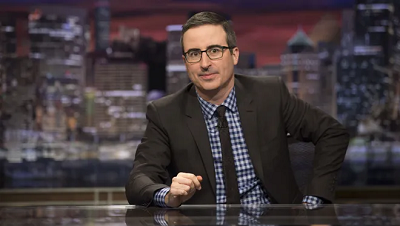
Photo By: HBO
What does this prove?
While reading like an episode of the much loved Bold and the Beautiful or Days of our Lives, the above situation is a farcical incident that unfortunately common territory when it comes to SOEs.
Of greatest concern is that Government is conducting itself without being held accountable by the public which ultimately has to foot the bill for any funding that SAA gets. And Government disguises this by highlighting the dire straights that Eskom finds itself in and the utilities challenging attempts to fast track the onboarding of independent power producers which the utility says is its own preferred model of privatisation. It seems strange that questions are being asked about the adoption of the SOE model in the US when South Africa has proven how problematic the business model is. At the core of the SOE model is an abject lack of accountability. As the benefactors of the services that these entities provide, the public should always be able to have a say in how these companies are run. A move towards an SOE model would be a regression.