

Founder: Turnaround Talk
Happy 2025 to all of Turnaround Talks followers. Let’s make this year the most productive one yet, where goals are achieved and significantly surpassed.
The New Year is typically a time of introspection, when people take stock of what occurred in 2024, and plans are made to address some of the lingering challenges from the year that was.
If the South African Government had to undertake this exercise now, it would be in a real quandary. By all accounts, the hard work done to eradicate load shedding is bearing good fruits. For the first time since 2016, the Rand is one of the world’s fastest-growing emerging currencies. Moodies is optimistic about the fortunes of Sub-Saharan Africa, including South Africa, which it was significantly concerned about in the past.
All good news. But, and there is a but, South Africa still has a significant workload to address to fully recover from its economic turmoil.
Economic growth of 3% is possible
The National Development Plan targets growth of between 2% and 2.5%/ y. However, economists have pointed out that – given the right conditions – South Africa could achieve growth of about 3%. But, a News24 article points out that, in order to achieve this, South Africa must invest R200 billion to revive its frayed railways, half that amount again to upgrade water infrastructure and tackle bottlenecks in both electricity and governance.
That’s according to the Bureau of Economic Research at Stellenbosch University, which warned that without this spending, the economy will remain stuck in low gear.
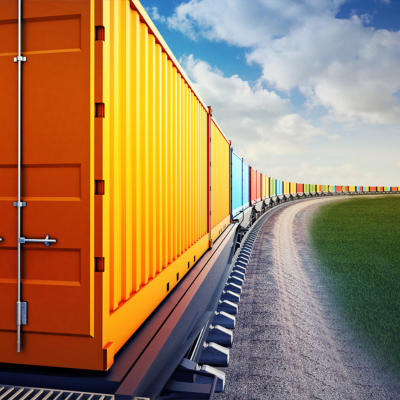
Image By: Canva
The article adds that Africa’s most industrialised nation has expanded by less than 1% on average for a decade, held back by mismanagement, corruption and underinvestment by its state-owned logistics and power utilities. Economists polled by Bloomberg forecast 1.7% growth in 2025. “Our baseline forecast is that real gross domestic product growth will average just below 2% between 2026 and 2029,” the BER’s Impumelelo Economic Growth Lab said.
Crises everywhere
The article points out that while South Africa has managed to avoid power blackouts since March, which used to be an almost daily occurrence, it is now grappling with a worsening water crisis. Its rail, port and road networks continue to degrade, the central bank said in November.
Poor performance by South Africa’s freight-rail services saw iron-ore stockpiles mount at mines and cut coal railings to a 30-year low, forcing producers to switch to truck transport that jammed roads and ports.
The article adds that concessions could add an extra 60 million tons of rail capacity to the 151.7 million tons state-owned rail operator Transnet reported in its year-to-end March, Impumelelo said.
In late 2024, the nation approved a blueprint for opening access to its vast rail network to private operators, its latest effort to enlist corporate know-how to kick-start economic growth.
The lack of stable water supply in major metro areas is a drag on consumer and business confidence, Roy Havemann, a senior economist at Impumelelo, said in the report.
The News24 article points out that the disruptions reveal serious weaknesses in local government, and investment will remain limited if they remain unaddressed.
The BER’s modelling suggests that these reforms if implemented together, could push economic growth to 3.3% by 2025. However, the success of this growth depends on swift and effective action.
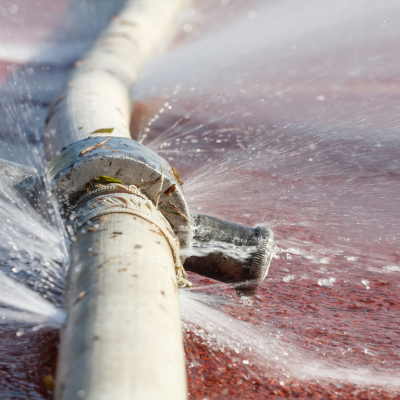
Image By: Canva
“The crux is in the implementation,” Havemann said.
From one crisis to the next
South Africa seems to be that family member who cannot function without drama and moves from one crisis to another.
However, we are far from the highest-risk economy in the world. Global geopolitical tensions have provided South Africa with a rare opportunity to get its house in order and rebuild. But where will the money come from? Eskom is facing a significant municipal debt crisis, which threatens to plunge the utility into turmoil once again. Additionally, the growing water crisis is a potent cocktail for downstream trouble, especially if the Johannesburg Mayor remains an absent parent as he did when Johannesburg faced a water shutdown crisis in December where parts of the city were without water for weeks. The bean counters have hard work ahead of them.
We live in interesting times.


