
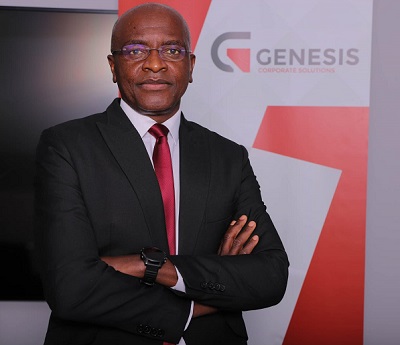
Partner: GCS
When we implement business rescue plans and turnaround strategies for companies, one of the first issues we discuss is how much time is spent on investing in developing teams within their business that will optimise the company’s cash flow.
The consensus is that significant time and capital are spent on the exercise. However, what if team development could take place on a daily basis within a short time span through focused programmes?
This was discussed in a recently published article on the Forbes website.
Quantifying the innovation
The article points out that the future belongs to teams that can see it coming—but our research shows that only 25% of Fortune 500 companies have a consistent, structured approach to anticipating and navigating disruption. Let that sink in for a moment. In a world where change is the only constant, three out of four of the biggest, most resource-rich organisations are effectively operating without a clear vision of what’s ahead, reacting to turbulence rather than proactively charting a course through it.
The consequences of this shortcoming are written in the headlines. Brands that once dominated their industries are being outmanoeuvred and outpaced by more nimble, forward-thinking competitors. The average lifespan of companies on the S&P 500 is shrinking (about 60 years in the 1950s to less than 20 today). And the gap between winners and losers is widening.
So, what sets apart the 25% who consistently stay ahead of the curve? The article adds that they’ve mastered the art of strategic foresight. And they’ve hardwired it into the rhythms and routines of their teams. One practice, in particular, has emerged as a game-changer: Foresight Five Minutes.

Image By: Canva
The Research Behind the Practice
The Forbes research team has spent years studying the practices that distinguish high-performing teams from the rest of the pack. We’ve analysed data from more than 3,000 teams across and led longitudinal studies to test the impact of specific interventions. The highest-performing organisations have shifted from traditional leadership to what I call Teamship. Teamship is the ultimate competitive advantage driven by the combination of two forces:
Shifting from traditional hierarchies to teammates co-leading teams and elevating each other to achieve world-class performance.
Shifting from standard working habits to inclusive 21st-century collaboration practices, processes and tools to achieve bolder innovation and faster decision-making. At the heart of Teamship are “Co-Elevation Behaviours” — the agreement among teammates to push each other higher in aligned pursuit of the mission. Co-elevation is the set of behavioural commitments to the mission and to each other, an unwavering belief in winning together.
The article points out that agile methodologies to be the most potent way to operationalise Teamship. Agile has already revolutionised how software gets made, with its laser focus on adaptability, iteration, and self-organising teams. Now, world-class organisations are harnessing Agile as the operating system for teams across every function. And Foresight Five Minutes is one of the most powerful tools in enterprise Agile toolbox. It’s a deceptively simple practice that, when implemented consistently, can have a profound impact on a team’s ability to anticipate and adapt to change.
How Foresight Five Minutes Works
The article adds that the concept is simple: Reserve five minutes in your regular team meetings for a structured foresight exercise. Each team member takes a turn sharing a signal of change they’ve observed — a new technology, a shift in customer behaviour, a move by a competitor, a regulatory development, and so on. The key is to look beyond the obvious and identify early indicators of the risk of potential disruption or opportunity.
As each person shares their observation, the team listens and builds on the insight, asking questions like:
- What might this mean for our industry?
- Our customers?
- Our strategy?
The goal is not to make predictions but to expand the team’s collective awareness and stimulate creative thinking about future possibilities.
Over time, as the team gets more comfortable with the practice, you can assign specific focus areas to each member. One person might be tasked with scanning for technological trends, another for geopolitical shifts, another for changes in customer sentiment, and so on. This ensures that you’re casting a wide net and leveraging the diverse expertise of your team.
The Power of Consistent Practice
The article points out that the magic of Foresight Five Minutes lies in its consistency. By making it a regular part of your team’s cadence, you cultivate a shared discipline of looking beyond the horizon. You create a safe space for people to voice unconventional ideas and challenge assumptions. And you send a clear signal that anticipating change is everyone’s responsibility, not just the purview of senior leadership.
Consider the example of Lockheed Martin. Prior to the COVID-19 shutdown in the United States in 2020, a team member raised a potential concern during a Foresight Five Minutes session. “I’ve been reading some blogs about a virus in China,” they said. “It’s a risk that we might want to move into assessment.”
The article adds that the team discussed the issue and decided to elevate it for further analysis. By February, Lockheed Martin had already moved out of their offices and gone fully virtual, well ahead of most other organisations. That early insight and quick action undoubtedly helped the company navigate the unprecedented disruption of the pandemic.

Image By: Canva
Integrating Foresight into Your Agile Rhythm
The article points out that for organisations that have embraced agile ways of working, Foresight Five Minutes fits seamlessly into the rhythm of sprints and standups. Just as you have ceremonies for reflecting on the past (like the sprint retrospective), it’s equally important to have rituals for looking ahead.
In fact, foresight and agility are two sides of the same coin. Foresight without agility is just idle speculation. Agility without foresight is just reactivity. But when you combine the two – when you have a regular practice of scanning for change and a nimble operating model that allows you to adapt quickly – you create a powerful flywheel of resilience and innovation.
Food for thought?
In the spirit of Nelson Mandela Day, we need to take the leap and investigate whether this can benefit businesses. As the great Madiba said, everything is impossible until it is done.
Innovative thinking will benefit the South African economy far more than apprehension.


