

Founder: Turnaround Talk
Information gathering seems to be severely lacking in the halls of Luthuli House (Headquarters of the ANC). Government was caught off guard by the severity of the 2021 civil unrest despite parties categorically stating in the media that Government was warned about the unrest beforehand, Government was blindsided earlier in February when Transnet announced its privatisation plans, and now it seems as if the President is blindsiding his own party!
Faced with the task of resolving the country’s energy crisis, President Cyril Ramaphosa cancelled his participation at the WEF Meeting in Davos to attend to matters of national importance. I was critical about this quoting Mary O’Conner: be careful what you busy yourself with. The bee is praised, the mosquito is swatted.
At the recently held (or should we say disrupted) State of the Nation Address, Ramaphosa made the biggest announcement in the fight against the energy crisis when he mentioned that he would be naming a Minister of Electricity. According to an article by Bloomberg, this announcement blindsided the ANC.
Going rogue
The article points out that President Cyril Ramaphosa blindsided the ruling ANC by reneging on a party resolution to place the state power utility under the control of the energy ministry and faces criticism for appointing an electricity czar within his office.
Ramaphosa declared a state of disaster Thursday over an energy crisis that is hobbling the nation’s economy. The measure will enable the government to bypass regulatory hurdles as it seeks to repair broken power plants and procure emergency electricity to end outages that have extended to as long as 12 hours a day since the start of the year.
The article adds that the president’s plan to create the position of electricity minister in the presidency and to leave Eskom under the control of the Public Enterprises Department upends an ANC decision to move control of the monopoly power supplier to the energy ministry. The decisions were taken without consulting party structures, according to two members of the ANC’s National Executive Committee who asked not to be identified as they’re not authorized to comment.
Photo By: Transnet
“What was announced here today, we heard it for the first time,” said Zingiswa Losi, President of Cosatu, which is in an alliance with the ANC. “We had spoken about phasing out the department of public enterprises and moving those entities to relevant ministries.”
The article adds that the ANC is desperate to end rolling blackouts as soon as possible as it sets its sights on retaining its majority in next year’s elections.
A David Campese styled sidestep
The Bloomberg article points out that the appointment of an electricity czar may enable Ramaphosa to sidestep a battle between Mineral Resources Energy Minister Gwede Mantashe and Public Enterprise Minister Pravin Gordhan for control of energy supply. Differences between the two ministers have frustrated efforts to implement reforms needed to address the outages and the main opposition Democratic Alliance has called for both to be axed.
The party insiders said they were puzzled by Ramaphosa making the announcement that Eskom would remain under Gordhan’s department so soon after the party took a decision last month to move it to the energy department. The ANC has a poor record in pushing through its resolutions and the latest decisions risks further damaging Ramaphosa’s standing with some in the party, one of the people said.
The article adds that the appointment of a minister in the presidency to oversee the electricity portfolio is the latest move by Ramaphosa to centralise decision-making in his office.
Detractors wont go away
The Bloomberg article points out that since the start of his administration, the president has established a so-called kitchen cabinet of close advisers and allies housed in the presidency to do some of the work designated to his executive.
Appointments to his office include former mining executive Sipho Nkosi as head of a team tasked with removing restrictions that stifle business, former central bank deputy Governor Daniel Mminele as head of a climate-finance task team, and Kgosientsho Ramokgopa as head of the infrastructure and investment office. The president’s detractors have accused him of setting up a parallel structure to avoid firing under-performing ministers in his cabinet.
Ramokgopa, an engineer, has been touted by insiders as a possible successor to Mantashe or potentially the new electricity minister, the people said.
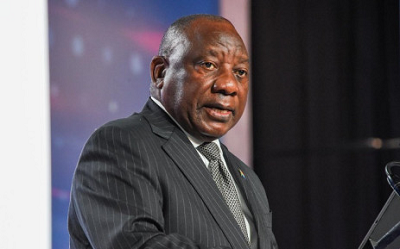
Photo By: EWN
Developing story
This is a developing story and will obviously change on a frequent basis.
Many of the top football managers in the world have one thing in common, they go into the game with a specific formation and game plan but change both of these aspects to adapt to the tactics used by the opposition. Ramaphosa and the new Electricity Minister will do well to adopt a similar approach as the electricity crisis is deeply rooted and has many moving parts.
Key will be two things, the splitting up of Eskom into its three units, and the onboarding of IPP’s.
The splitting of Eskom will allow business analysts and turnaround professionals to conduct an independent business review of the utility and make key recommendations that would benefit the company.
The onboarding of IPPs will reduce Eskom’s reliance on diesel which is currently being used to run the utilities open cycle gas turbines. An article by EWN points out that the initial budget for the 2022/2023 financial year was R6 billion, but Eskom’s budget quickly ran dry, leading to the power utility spending double what was allocated. However, we also cannot ignore the concerns of outgoing Eskom CEO, Andre de Ruyter, who said in the past that there is a fear within government that a privatised energy model would see prices raise so significantly that it would be unaffordable for the majority of South Africans. While onboarding IPPs is important, it is equally important to implement pricing guidelines to negate De Ruyter’s valid fears. How will the ANC be blindsided next week?


